


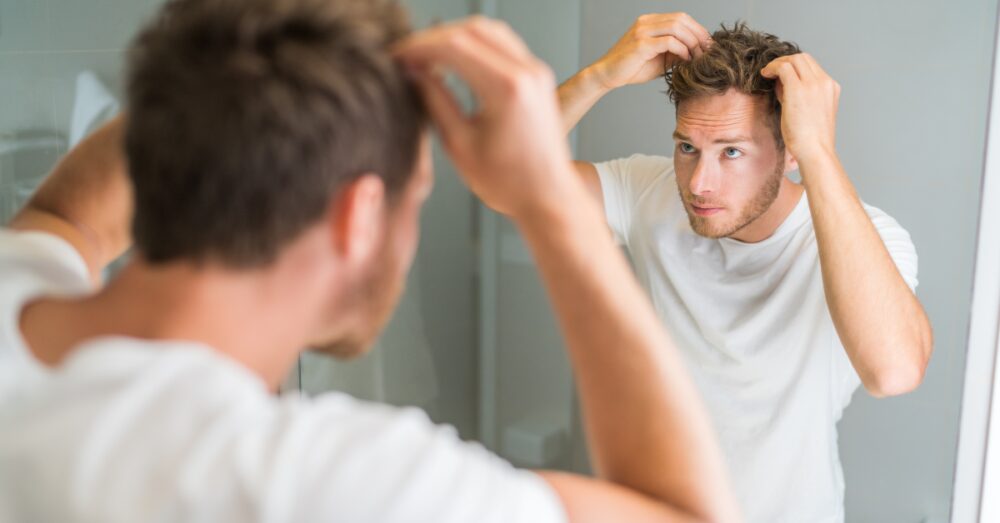
Noticing more hair in your brush, or a part that looks wider than it used to, can feel unsettling. If you’ve started researching PRP for hair loss, you’re probably looking for something that works with your body rather than against it. Before you book, a few honest facts can save you time, money, and frustration.
This guide covers the three things we wish every client knew before starting PRP for hair loss in San Diego. You’ll learn who it helps most, how long results really take, and what you can do to protect your investment.
Key Takeaways
- PRP works best for early-stage hair loss, such as thinning from androgenetic alopecia, while the hair follicles are still active.
- Results build slowly. Most clients need a series of sessions and should expect several months before seeing new hair growth.
- Your habits before and after each visit, along with regular maintenance treatments, shape how well and how long your results last.
Many clinics offer PRP, but at Coastal Medical Aesthetics it’s never a quick add-on. Our licensed providers take time to look at your scalp, ask about your health history, and talk through whether PRP fits your goals before anything is scheduled.
How Does PRP for Hair Loss Actually Work?
Platelet-rich plasma (PRP) is a substance derived from your own blood. During processing, your whole blood is separated so the platelets become concentrated. Platelets are best known for wound healing, and they help accelerate healing by carrying growth factors, proteins that signal cells to repair and rebuild tissue.
These include vascular endothelial growth factor, which supports blood flow, along with epidermal growth factor and fibroblast growth factor, which play roles in cell growth and tissue regeneration. Delivered into the scalp, they may help nourish weakened follicles, stimulate hair growth, and wake up dormant hair follicles that have slowed their output.
Research supports this approach for certain types of thinning. According to Harvard Health Publishing, a 2018 study found PRP helpful for androgenetic alopecia, a hereditary and hormone-driven form of thinning that affects up to 35% of women by age 60.
1. PRP Works Best When Hair Loss Is Caught Early
This is the most important thing to understand. Platelet-rich plasma injections can’t create follicles that are already gone. They work by supporting follicles that are still alive, even if those follicles are producing thinner, weaker strands.
That’s why early-stage hair loss tends to respond best. If you’ve noticed gradual thinning over the past year or two, rather than smooth, shiny areas of scalp, you may be in a good window for hair regrowth.
Who Is a Good Candidate for PRP Therapy?
PRP therapy is most often used for androgenetic alopecia, sometimes called androgenic alopecia. This hereditary pattern shows up as male pattern baldness or female pattern hair loss. In women, it often appears as a widening part or less volume near the crown.
A good candidate is generally healthy, has realistic expectations, and is dealing with gradual thinning hair rather than sudden, patchy loss. Clients who want a non-surgical treatment that uses their own blood, without the downtime of a hair transplant, are often drawn to PRP. Unlike many hair loss treatments that rely on daily products, PRP is done in-office every few weeks.
So does PRP work for everyone? Not quite. It may not suit you if your hair loss is tied to a thyroid issue, a nutritional gap, recent illness, or certain medications, since the cause needs attention first. Platelet or bleeding disorders, active scalp infections, and pregnancy are also reasons to wait.
2. Results Take Time and a Series of Sessions
PRP is not a one-visit fix. Hair grows slowly, and growth factors need repeated chances to promote hair growth at the follicle level. That’s why most plans begin with a series rather than a single appointment.
A common starting point is three sessions spaced about four weeks apart. This schedule gives your scalp steady support across more than one stretch of the hair cycle, rather than a single short boost. Your provider may adjust that number after your first three treatments, based on how your hair responds. Some clients benefit from an extra booster session, and anyone with more advanced thinning may need a longer runway before seeing change.
Every strand moves through a hair growth cycle with a growing phase, a transition phase, and a resting phase. PRP aims to lengthen the growing phase and help resting follicles return to it sooner. Since that cycle unfolds over months, visible change does too.
Here’s a realistic timeline. You won’t see more hair right away, but in the first couple of months, many clients notice less shedding. Around three to six months, improvements in hair thickness and hair density usually become easier to see. Full results are best judged a few months after your last treatment in the series.
From there, maintenance treatments every four to six months help keep your progress going. Skipping them won’t erase your results overnight, but the underlying hair loss doesn’t stop on its own.
3. What You Do Before and After Matters
The third thing people rarely hear enough about is how much your own choices affect results. PRP depends on the quality of your blood and the health of your scalp, so small steps on your end make a real difference.
What Happens During Your PRP Procedure?
Your visit starts with a quick blood draw, much like routine lab work. This small sample goes into a centrifuge, which separates the red blood cells and platelet poor plasma from the concentrated platelets. Depending on the protocol, your provider may use a substance like calcium chloride for platelet activation before treatment.
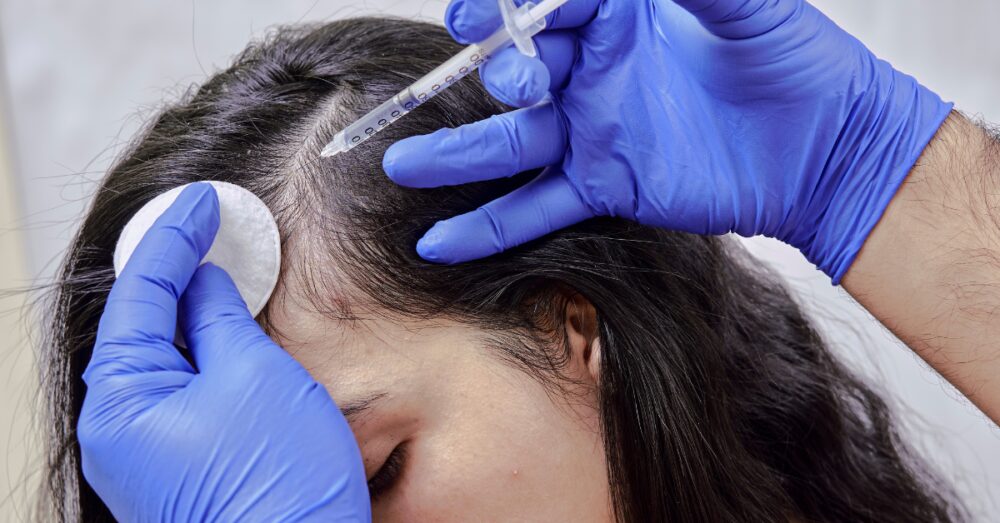
Your provider then applies a topical numbing agent, a gentle form of local anesthesia, and uses a thin needle to place PRP injections across the targeted areas of your scalp. Most clients describe the pain as mild pressure or brief pinching. A PRP treatment in Del Mar Heights at our clinic typically takes 30 to 60 minutes.
To prepare, drink plenty of water and eat a balanced meal beforehand, which makes the blood sample easier to collect. Your provider may also ask you to pause certain anti-inflammatory medications or supplements that affect how platelets work. Always check with your provider before stopping anything you take.
What Are the Potential Risks and Side Effects?
Because PRP comes from your own blood, the risk of an allergic reaction to the plasma itself is very low. That’s one of the key benefits that helps many clients feel at ease choosing it.
The most common potential side effects are mild tenderness, redness, or swelling at the injection site, plus the occasional small bruise. These usually fade within a few days. Infection is one of the rarer potential risks, which is why PRP should always be performed by a licensed provider in a clean clinical setting.
For the first 24 hours, avoid strenuous workouts, heavy sweating, and direct sun on your scalp. Gentle care gives the healing process its best chance.
In our experience, the biggest predictor of success isn’t how much hair you’ve lost. It’s how soon you start and how consistent you stay. Clients who come in at the first sign of a widening part and complete their full series tend to see more noticeable change than those who wait or stretch sessions too far apart. Think of PRP less as a single fix and more as a routine for your scalp.
Frequently Asked Questions About PRP for Hair Loss
How Soon Can I Wash My Hair After a PRP Hair Session?
Most clients are advised to wait until the following day before washing their hair after PRP. This gives the injection sites time to settle and allows the plasma to stay where it was placed. When you do wash, use lukewarm water and a gentle shampoo, and skip vigorous scrubbing or hot styling tools for a day or two. Your provider will share aftercare instructions specific to your session.
Can I Still Color My Hair If I’m Getting PRP for Thinning Hair?
Yes, in most cases you can keep coloring your hair. Timing is what matters. Many providers suggest booking color, bleach, or chemical treatments a few days before your PRP session or waiting several days afterward, so your scalp isn’t irritated while it heals. Strong chemicals on freshly treated skin can sting and cause inflammation. Share your salon schedule with your provider so they can help you plan around it.
Does PRP for Hair Loss Work for Women in Their 20s and 30s?
It can. Female pattern hair loss doesn’t only appear after menopause, and many women notice a wider part or thinner ponytail in their 20s or 30s. Because PRP works best on early thinning, younger women are often strong candidates. Sudden shedding at this age can also be linked to stress, hormones, or postpartum changes, so a consultation helps confirm the cause before you start.
What Happens If I Stop My PRP Hair Treatments?
If you stop PRP, you won’t lose your progress overnight. Results often hold for several months, and some clients maintain improvements for a year or longer. However, PRP doesn’t cure hereditary thinning, so gradual loss usually returns over time. Maintenance sessions every four to six months are the most reliable way to protect the density and thickness you’ve worked to build.
How Can I Tell If PRP Is Working Before Full Results Show?
Early signs are usually subtle. Many clients notice fewer strands in the shower drain or on their brush within the first two to three months. Next, you may spot short, fine new hairs along your part or hairline. Taking monthly photos in the same lighting and angle is the easiest way to track progress, since day-to-day changes are too gradual to catch in the mirror.
Start Your PRP for Hair Loss Journey in Carmel Valley and San Diego
Thinning hair doesn’t have to be something you quietly accept. At Coastal Medical Aesthetics, PRP therapy in Carmel Valley begins with a personalized consultation where we assess your scalp, review your health history, and build a plan around your goals, not a one-size-fits-all package. Our licensed providers offer PRP for both hair and skin, and they’ll walk you through what to expect at every stage.
From the moment you arrive, you’ll feel the difference of a calm, luxurious space designed around your comfort. We focus on natural, measurable results and stay with you through every session and check-in, so you’re never guessing about your progress.
The earlier you start, the more PRP has to work with. Book your consultation today at Coastal Medical Aesthetics, 3435 Del Mar Heights Road, #D6, San Diego, CA 92130, or call 858-705-4489 to take the first step toward fuller, healthier-looking hair.